
Kindergarten & the TK Decision · Redbud Montessori, Davis
The years it all comes together.
If you're reading this, your child is probably already here — somewhere in the middle of their time at Redbud, and you have a decision on the horizon. At four, transitional kindergarten becomes an option. At five, kindergarten. Both are real choices, and families we love have made them.
What we'd like to do here is simply show you what's ahead, so you know what your child would be in the middle of. The last two years at Redbud are unlike the years before them, and they're easy to miss if no one describes them.
the blue and red groupsWhat three years is for.
Your child spent their first year here as one of the younger ones — watching the older children, being helped by them, learning how the room works.
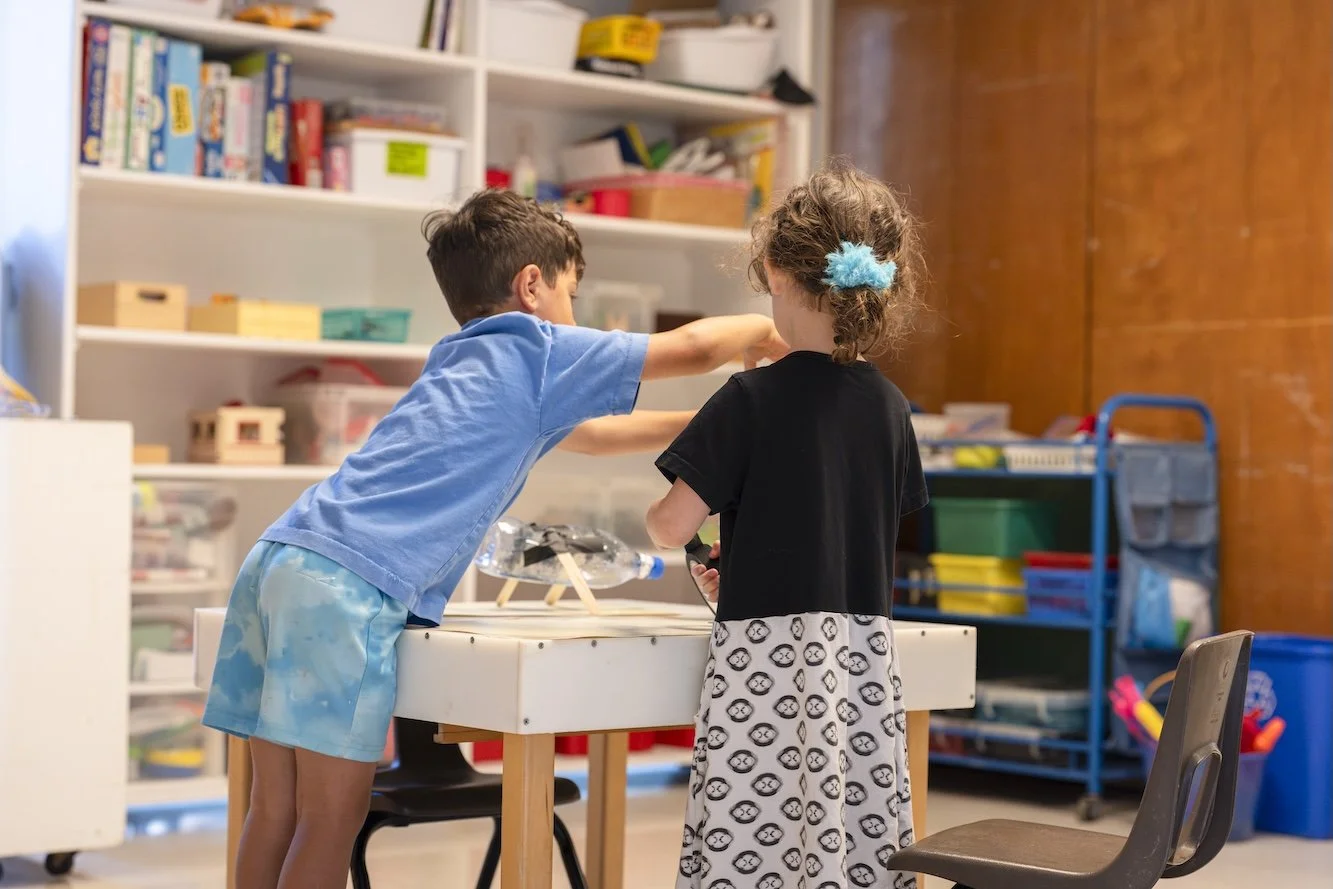
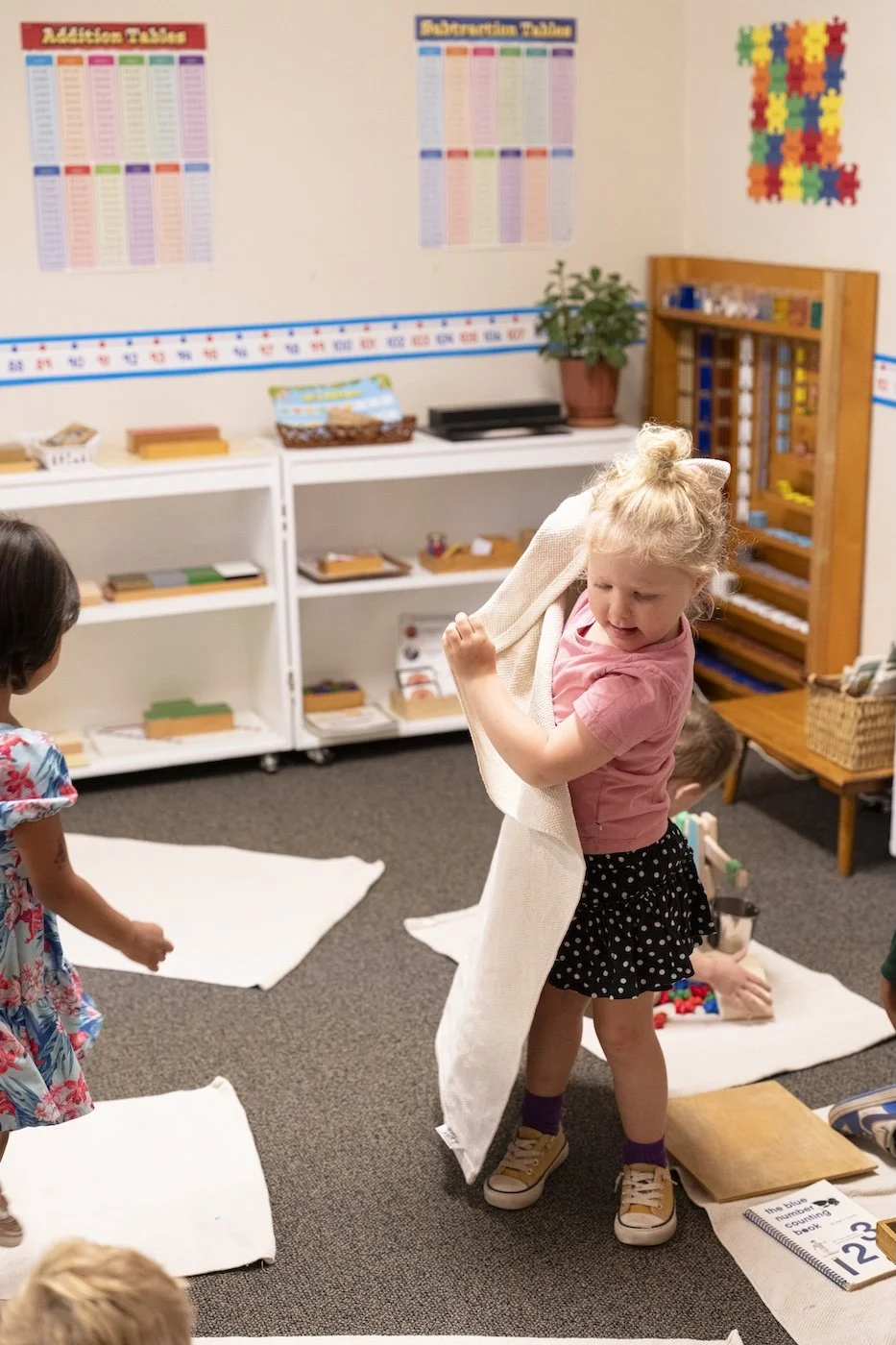
The blue and red years are when that turns around. Montessori built the mixed-age classroom around a three-year cycle — children arriving young, staying through six, and spending that last stretch as the oldest in the room. They become the one who shows a younger child an interesting job. The one who knows where everything belongs. The one another child comes to for help.
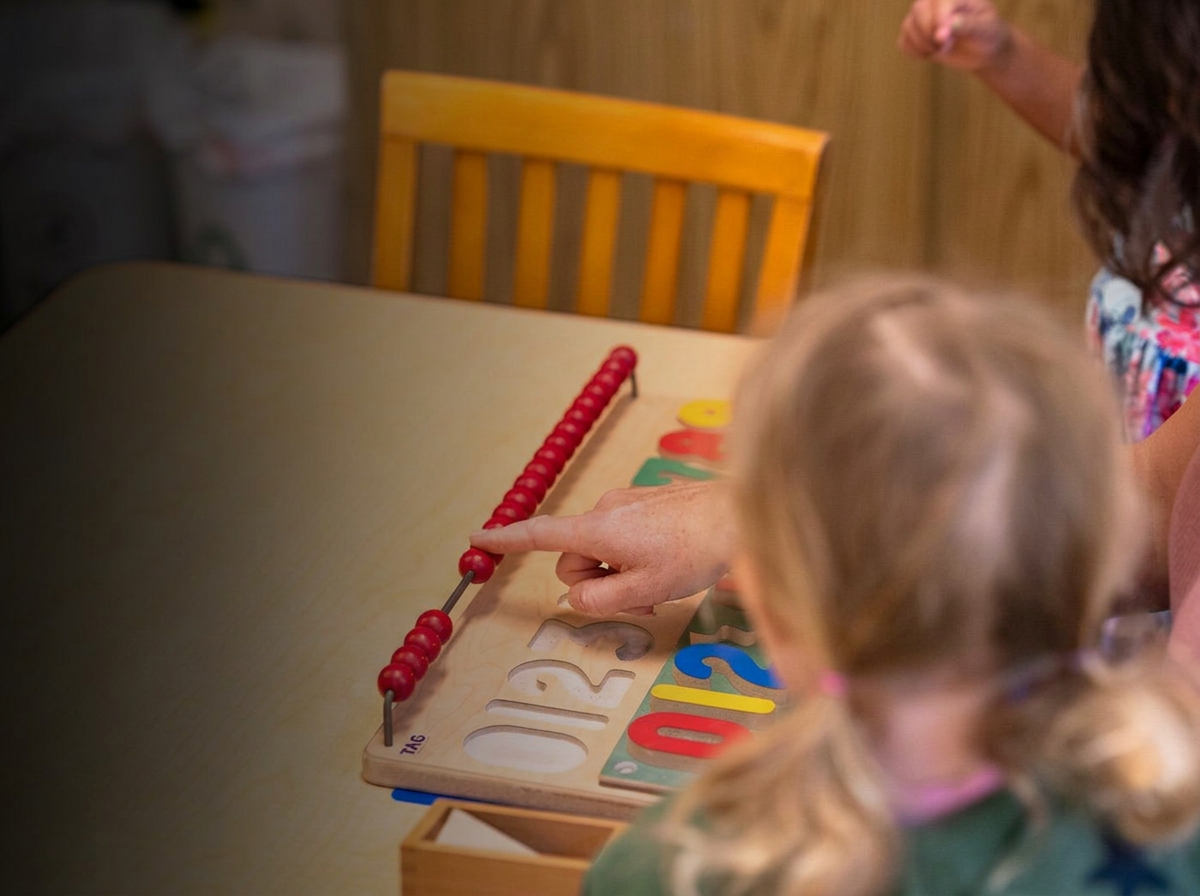
Underneath that, the work deepens. Two or three years of materials come together. Children who have had the moveable alphabet and the number rods within reach since they were three start reading and working with math — not because anyone hurried them there, but because they've had years of quiet access and no one ever told them to wait.
And the teaching does something we didn't fully anticipate until we'd watched it for forty years. A child who spends a year explaining things to younger children ends up knowing that material differently than a child who was taught it.
the TK questionBefore you compare, a few things to know.
Transitional kindergarten is open to every four-year-old in Davis now, and there's no tuition. For a lot of families, that's the whole reason to consider it, and we understand completely.
However, there are some things worth knowing ahead of time. TK is about three hours of classroom time, so families who work usually need a before- and after-care program to cover the rest, and those carry their own monthly cost. It's often more than parents expect. If you're comparing, it's worth pricing the whole day rather than the tuition line.
A day here stays in one place. The same teachers from drop-off to pickup, the same rooms, the same children — and for a four-year-old, that continuity is most of what makes the day feel steady.
There's something else worth weighing at this age. Four is when a lot of the emotional work happens — learning to sit with frustration, to say what's wrong instead of grabbing, to work out a disagreement without an adult deciding it. That learning needs an adult with time to spare, over and over, on an ordinary Tuesday. It's slow, and it's the kind of thing that only happens when the numbers allow for it.
If tuition is what's deciding this for you, ask us about tuition assistance. Applications are due in late February, so it's worth raising early.

the kindergarten questionWhat the red year gives a child.
At five and six, you'll have two good options in front of you, and they're genuinely different things. Only you can weigh which one fits your child. Here's what the year looks like on our side.
-
![A teacher sitting on the floor with a group of young children sitting on the carpet in a classroom. The background has wooden shelves, a whiteboard, and educational materials.]()
A program built for them.
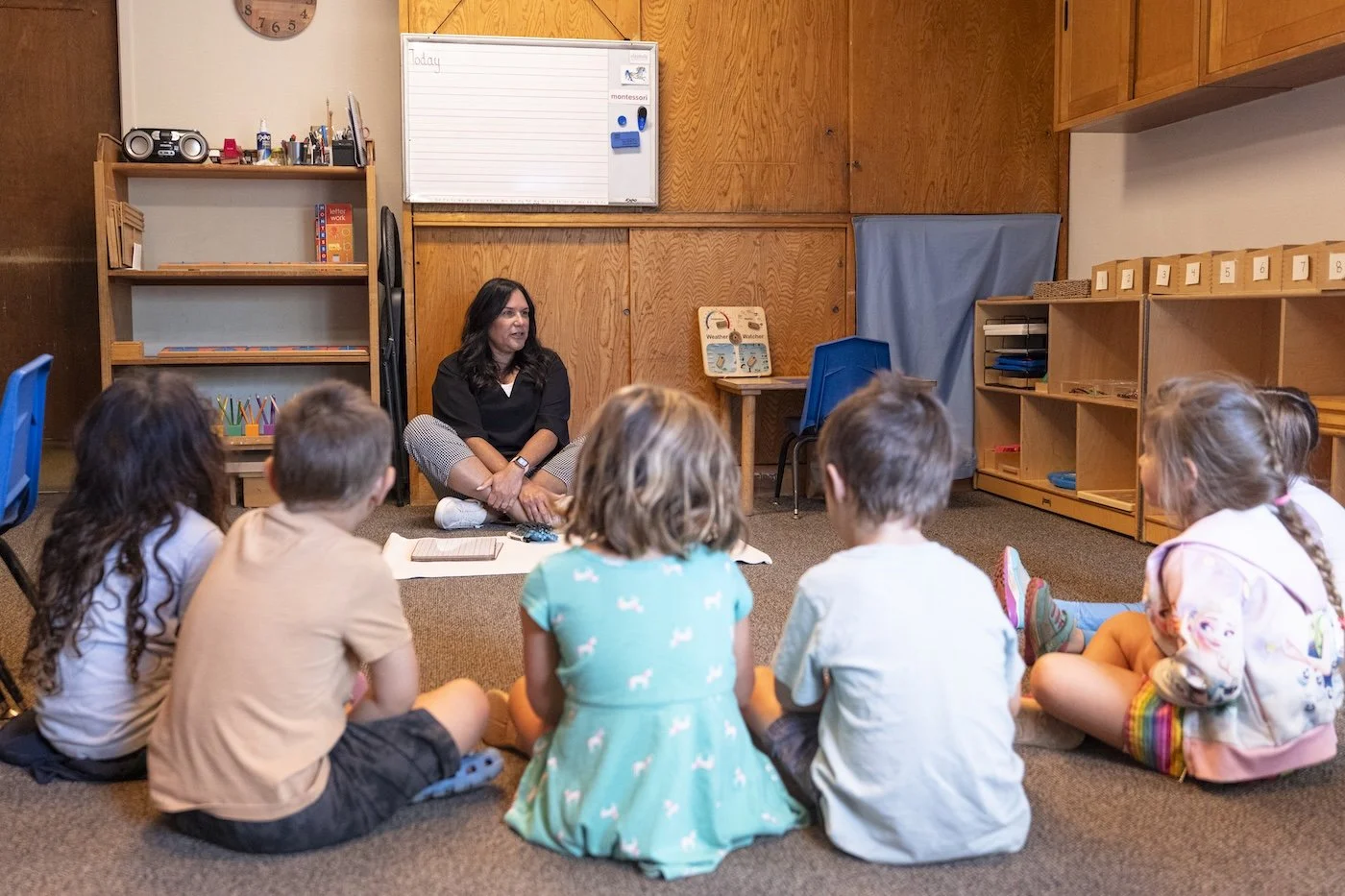
The red group year isn't the same day with older children in it. They start earlier and take two morning lessons where the younger groups take one. Four afternoons a week they have their own programming — P.E. on Mondays and Wednesdays, cultural awareness on Tuesdays and Thursdays. It's a year designed as its own thing.
-
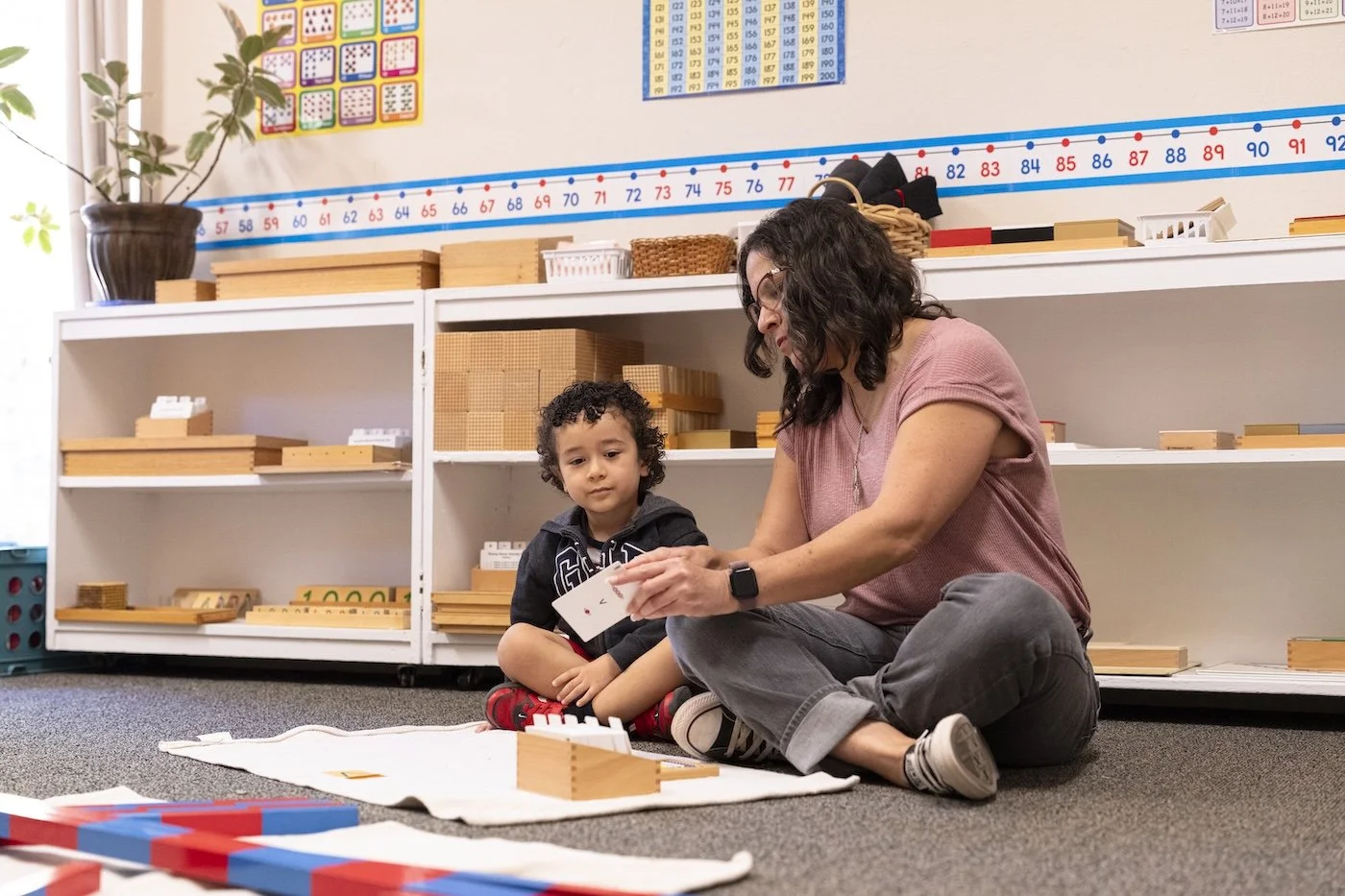
![A woman and a young boy sitting on the floor in a classroom, engaging in an educational activity with wooden blocks and cards, with shelves, educational posters, and a plant behind them.]()
A small room, and people who know them.
7 teachers, and never more than 36 children in the entire school. Your child's teachers have known them since they were 2½ — and some since they were born. They know how they handle a hard morning, what they were like at three, which things come easily and which don't. That kind of knowing takes years, and it's already built.
-
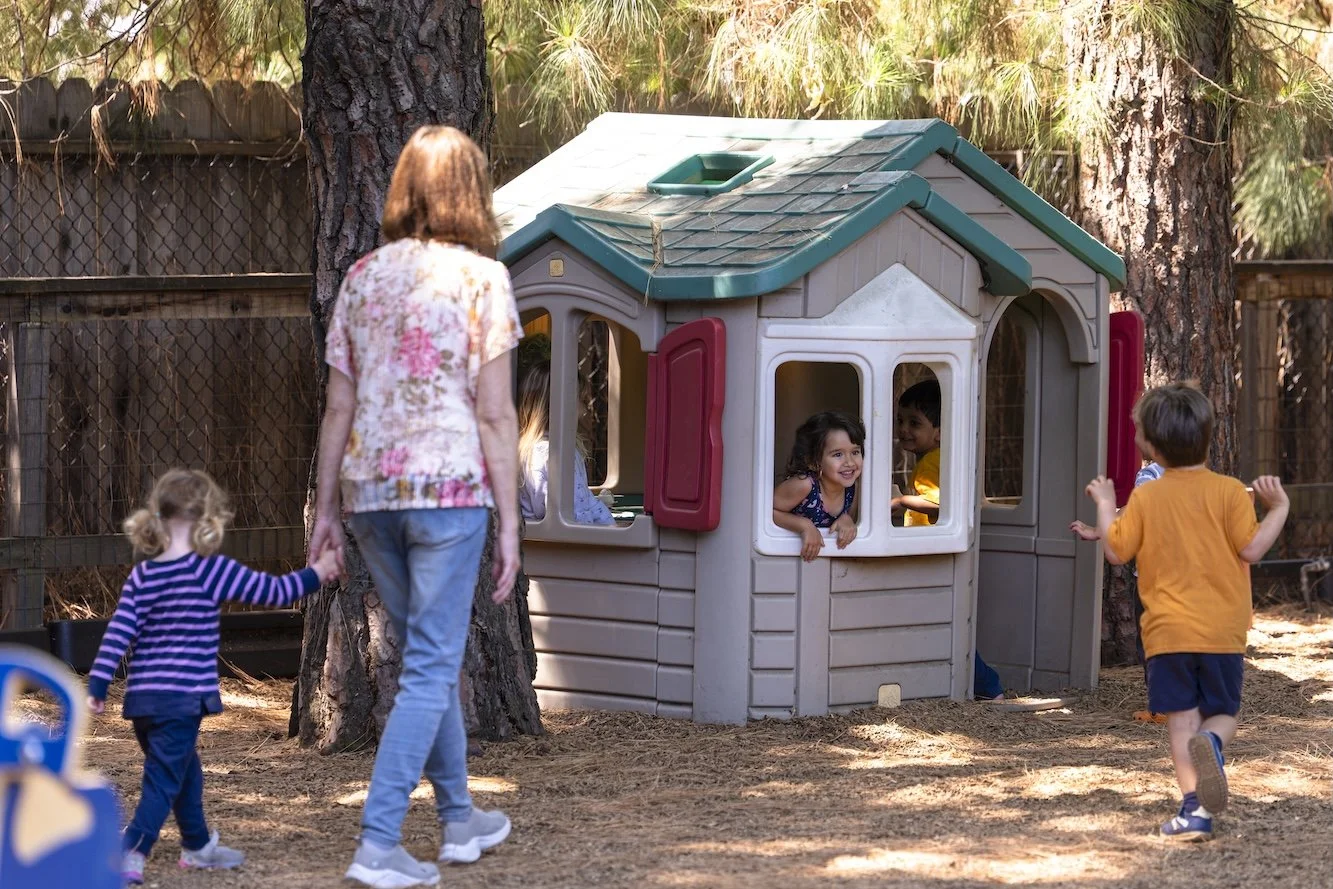
![Children playing outside in a backyard with a small playhouse, surrounded by trees and a wooden fence, with an adult supervising.]()
Room for the hard parts.
Some of the most important work at four and five isn't academic — it's learning to sit with a big feeling until it passes, to say what's wrong instead of hitting, to work out a disagreement over a material without an adult settling it. That takes a teacher with time to crouch down and talk a child through it, not once but the fortieth time it happens. With 7 teachers among 36 children, there's always someone free to do exactly that. Children leave the red group year able to name what they're feeling and work through a conflict on their own, and it's the part parents tell us about years later.
-
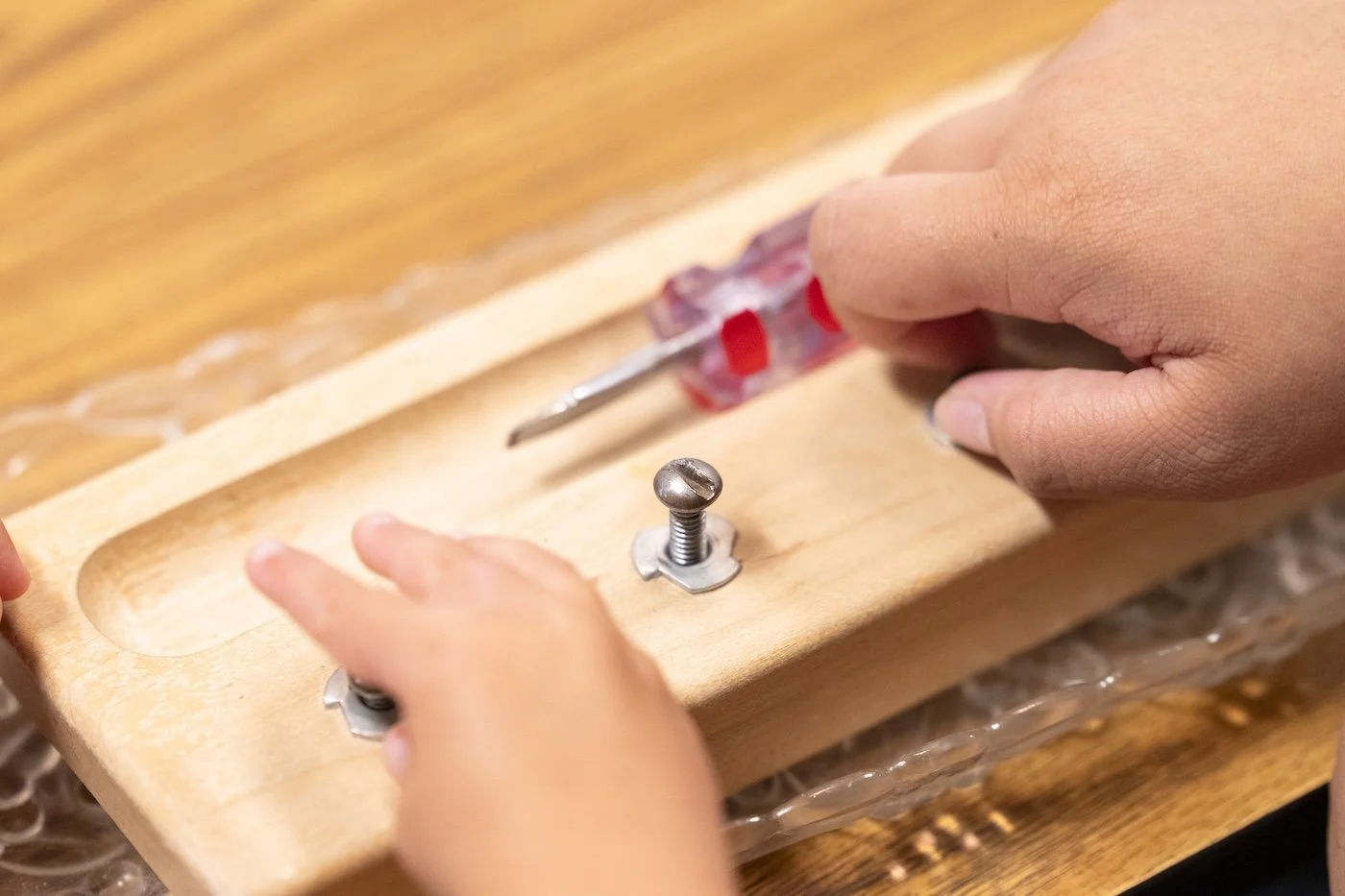
![A person using a screwdriver to tighten a screw on a wooden piece with metal washers.]()
A year of leading.
The red-group children are the oldest in a mixed-age classroom, and the room depends on them. They teach. They notice when a younger child needs help before an adult does. Montessori's own reasoning was that older children are often the most useful role models a young child has — which only works if some children stay long enough to become the older ones.
-
![Person drawing a design on tissue paper with a pencil for tattooing, with a paperclip nearby on a white surface.]()
Work that's genuinely theirs.
Most children finish the red year reading and working comfortably with numbers, thanks to three years of unhurried access to the materials. But the part that tends to matter most in first grade is subtler — they're used to choosing their own work, sticking with something difficult, and finishing it.
-
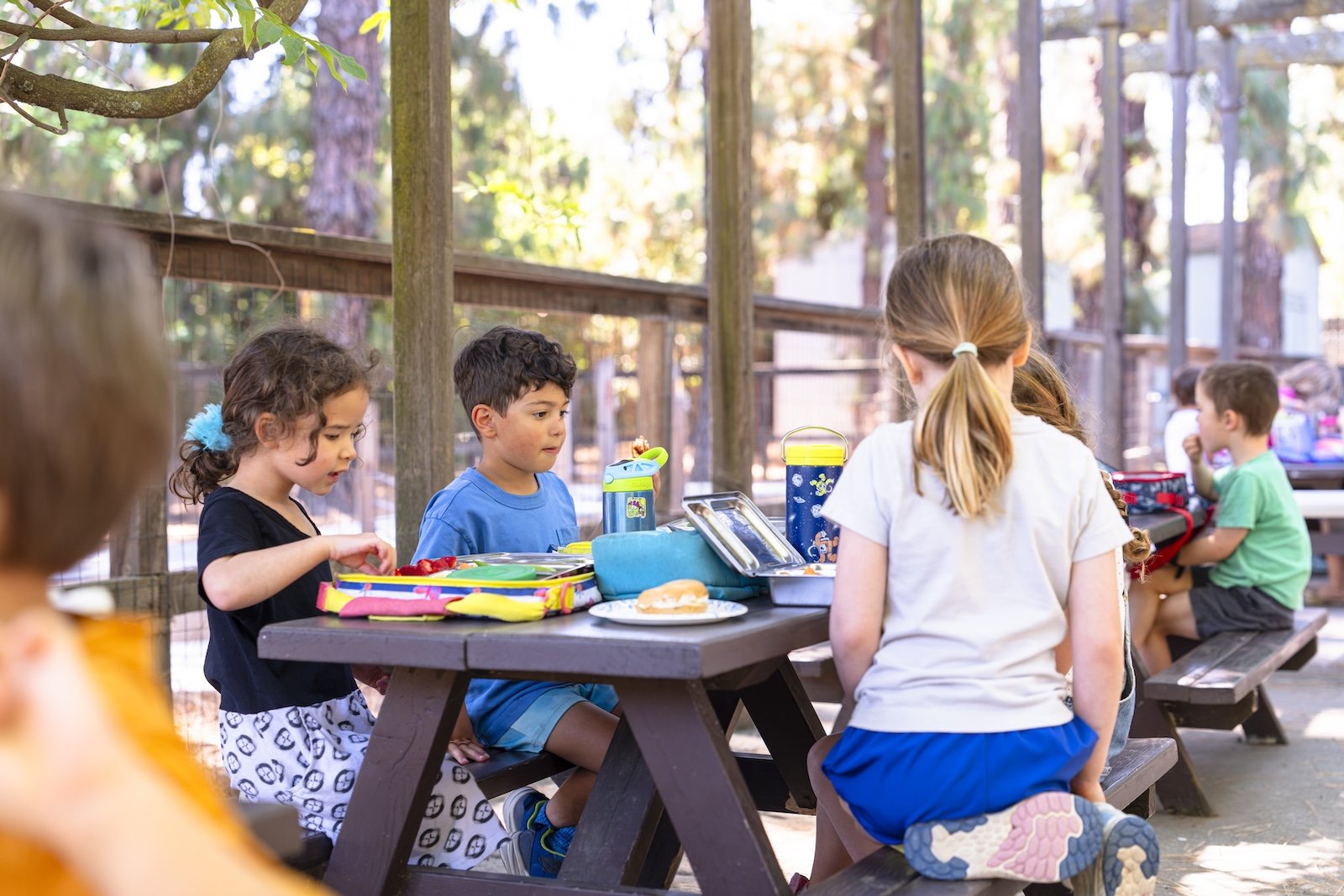
![Children sitting at a picnic table outdoors, having snacks and lunch, surrounded by trees and a wooden fence.]()
A different kind of social year.
It is worth naming, since it comes up — the red group is small, especially compared to a public class. That means a year spent closely known, by children and teachers who've been with your child for years. It also means a smaller circle. Most children move on to first grade and make friends easily; six-year-olds generally do. Which setting fits your child better is a real question, and one only you can answer.

kind words from our parents
let's talkCome talk it through with us.
If this decision is on your mind, come find us. The director’s door is always open. Tell us what's making it hard, and if it's the money, say so plainly, because there are things we can look at together.